

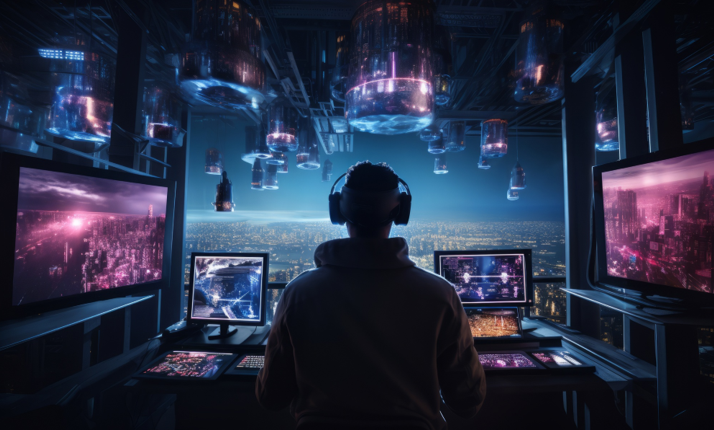
Good design used to be invisible. The best interfaces were the ones you stopped noticing – menus that felt intuitive, buttons where your thumb expected them, information organized without effort. That standard has not disappeared, but something has been layered on top of it in recent years. The new expectation is not just that a platform should be usable. It should feel like somewhere worth being.
This shift in what users expect from interactive entertainment has been gradual enough to trace only in retrospect. The moment it became visible was when platforms started investing seriously in environment rather than function. A button that processes a transaction is function. The music while you wait, the lighting scheme of the interface, the animation that accompanies a successful action – these are environment. The casino immersive roulette category was among the first to demonstrate this distinction at scale: when studios invested in set design, ambient sound, and presenter training beyond what the transaction required, engagement metrics moved in ways that pure functional improvement never achieved. The lesson traveled outward, and now the same thinking is visible across streaming platforms, sports betting interfaces, and social apps.
From function to atmosphere
Practitioners talk now about emotional architecture – the sequencing of states a user moves through during a session and how each transition is managed. The goal is not just to deliver an outcome but to make the journey feel considered. The difference between clicking submit and watching a loading bar, versus tapping confirm and watching a brief animation that makes the wait feel productive and the completion feel earned – that gap is the territory this discipline occupies.
Micro-interactions – the small animations, sounds, and visual responses accompanying individual actions – have become a serious design discipline in their own right. They were always present but historically treated as polish applied after the substantive work. Evidence from higher-engagement platforms suggests they are not polish. They are load-bearing elements of the emotional experience, and platforms treating them as afterthoughts produce experiences that feel subtly wrong even when users cannot name the problem.
Atmospheric quality does not emerge from any single decision. It is cumulative – the product of dozens of small choices that either cohere into something intentional or fracture into something assembled from parts.
| Design dimension | Earlier standard | Current expectation | Effect on user behavior |
| Visual environment | Functional, information-dense | Atmospheric, spatially coherent | Longer sessions, higher return rate |
| Audio design | Notification-focused | Continuous, mood-congruent | Deeper immersion, reduced distraction |
| Micro-interactions | Minimal, functional | Expressive, emotionally resonant | Higher action completion rates |
| Pacing and transitions | Abrupt, efficiency-focused | Smooth, narrative-aware | Lower dropout between steps |
| Personalization signals | Generic | Context-aware, adaptive | Increased sense of investment |
The personalization problem
One of the more complicated trends in experience design is the growing expectation of personalization – the sense that a platform knows who you are and adjusts accordingly. Users have been trained by sophisticated consumer platforms to expect interfaces that adapt: recommended content, remembered preferences, interactions reflecting prior behavior. The expectation has spread faster than the ability to meet it.
The honest version of what most platforms are doing is less sophisticated than users assume. True personalization requires data infrastructure and design flexibility that most platforms have not built. What they have instead is a set of configurable surface elements that create the impression of personalization without the substance. This is not necessarily a problem – the impression has genuine value – but it creates a ceiling the more thoughtful platforms are starting to bump against.
The next phase will probably involve behavioral adaptation – interfaces that shift based on how a user has been engaging in the current session, not just historical profile. A user playing conservatively for twenty minutes might see a subtly different set of options than one playing aggressively. This kind of real-time responsiveness is technically feasible now, and early experiments suggest it produces the felt-personalization that static configurations cannot.
What coherence actually requires
The hardest thing to achieve in experience design is not any individual element. It is the coherence that makes all the elements feel like they belong together. A platform can have excellent visual design, thoughtful audio, and well-crafted micro-interactions that still feel assembled from parts – because they were.
Building coherent experiences requires decisions made at the level of principle rather than execution. What is this experience trying to make a person feel? What is its emotional register? What should it never do, regardless of what the data says is optimal? These questions resist easy measurement, and uncomfortable questions tend to get deferred in favor of ones that produce legible numbers.
The platforms getting this right have found ways to hold both – enough analytical discipline to know what is working and enough design integrity to know when the numbers are measuring the wrong thing. That balance is genuinely difficult to maintain. It is also, increasingly, the difference between platforms that feel like products and platforms that feel like experiences.
