

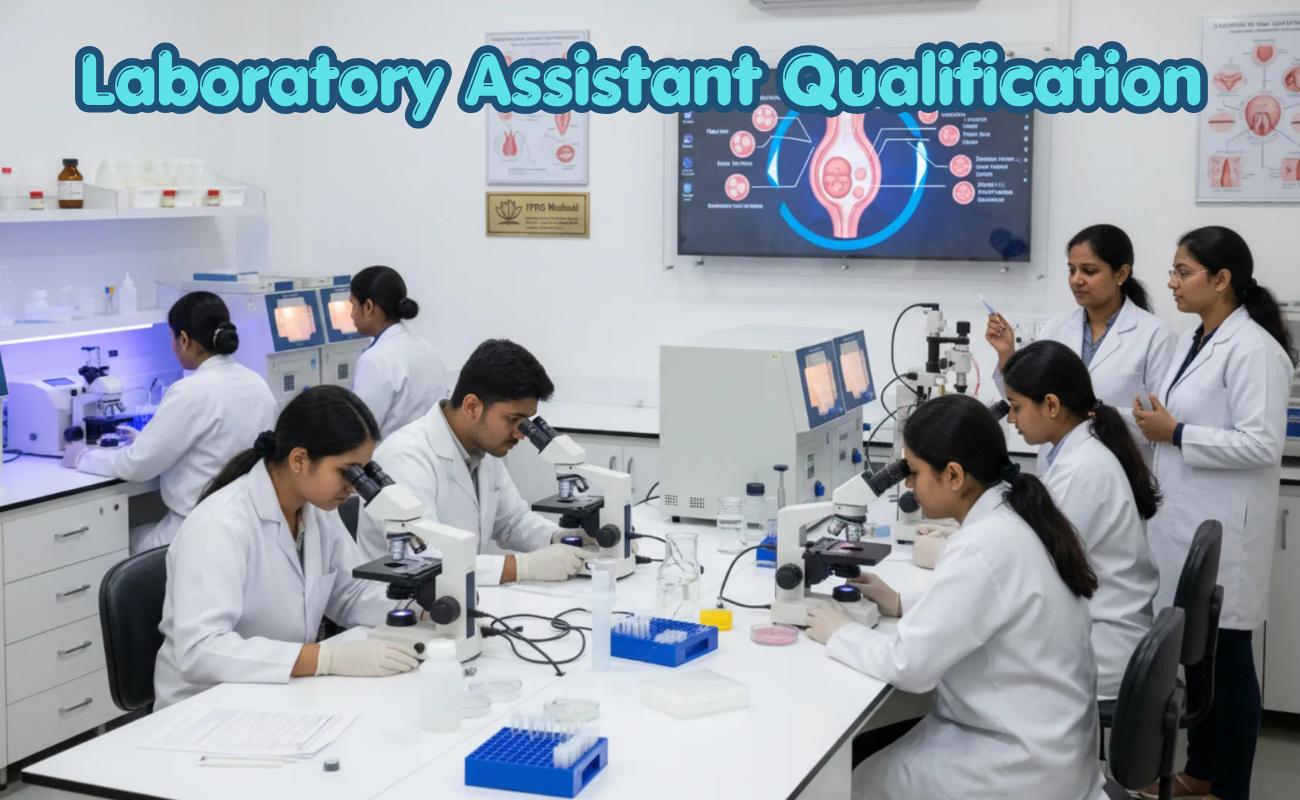
Interested in a job as a lab assistant? One of the first places to get into the rising healthcare and diagnostics sector in India. A lab, hospital, or research center will always need reliable staff to assist them in the day-to-day testing duties and in managing samples and equipment.
The positive side of the story is that you don’t have to undertake a lengthy and expensive education to get started. If you’re interested in becoming a laboratory assistant, this guide will take you through the requirements, skills, and the pathway to pursue this career.
Who is a Laboratory Assistant?
A lab assistant is a person who works in a laboratory in the day-to-day operations. They support technologists and scientists by preparing samples, cleaning equipment and ensuring the laboratory is organised. It is a practical role, rather than one that typically makes medical decisions, it is about helping the people who do.
Laboratory assistants can be found in hospitals, diagnostic centers, pathology laboratory, research institutes or even in the science departments of colleges. This sort of support is required by many different types of labs, so the job opportunities are dispersed between public and private sectors.
Educational Qualifications Required
A top school education is not required to begin a career as a lab assistant. Higher secondary (10+2) with science subjects is desirable, with a minimum requirement of 10+2 with science subjects by most employers. This will provide the fundamental scientific background required for laboratory tasks.
You will make a great impact if you want to be different. A short diploma course such as DMLT (Diploma in Medical Laboratory Technology) can help you a lot. Typically, these programs last for a year or two and focus on hands-on skills such as sample handling, the operations of laboratory equipment, and safety protocols.

If you are an ambitious student who wants to pursue further education, a Bachelor’s degree, like a BSc in Medical Laboratory Technology, will open the opportunity for you to access better-paying jobs in the future. These certifications are given by both government and private institutes and it is important to compare different offers depending on your location and budget.
Read Also: MBBS Full Form: Meaning, Course Duration, Eligibility & Admission Process
Key Skills Needed to Become a Laboratory Assistant
Qualifications may help you get in the door, but the right skills can help you make the most of your time when you are there. The following are a few of the most beneficial skills for a laboratory assistant:
- Problem sensitivity: Small errors in the procedure used for taking samples can impact test results
- Basic computer skills: For recording data and managing lab software
- Communication skills: Collaboration with technologists, pathologists and sometimes with patients
- Knowledge of lab equipment: Usage, cleaning and safe storage of equipment
- Knowledge of safety measures: Labs have chemicals and biological samples, safety is always a top priority
All these skills are not skills to be learnt over a number of years. They are usually acquired as a result of basic training, short courses, or through training on the job.
Job Roles and Responsibilities
There are a variety of tasks a lab assistant might do on a day-to-day basis, depending on the organization they work for, but some of them are:
- Proper sample collection and labeling.
- Proper maintenance, sterilization and cleaning of lab equipment
- Helping senior technologists/pathologists with tests
- Ensuring records and documentation is maintained up to date.
- Efficiently handling lab supplies and replenishment if required.
It’s a job that involves helping other people; it’s a good place to begin if you are new to the medical or scientific world.
Career Path and Growth Opportunities
Both the greatest strengths and weakness of being a laboratory assistant is how much you have to grow. The typical career progression is along these lines:
Laboratory Assistant to Senior Lab Assistant to Lab Technician to Lab Technologist.Once you have experience, you may also specialize in pathology, microbiology, and/or biochemistry. To save money and eventually do a BSc or MSc to obtain better-paid and more specialized jobs, many people take the position of a lab assistant.

Holding on to the field for long enough can also result in more responsibility, better salary, and leadership positions within the lab without additional studies.
Salary Expectations in India
The salary of a lab assistant in India typically begins low but can be raised with experience. Entry level salary starts at ₹10,000 to ₹18,000 per month. This range is influenced by:
- The region or city you are working in (usually a metro area pays more)
- At a government or private facility
- Your qualifications and experience.
Embarking on career paths with technician or technologist positions often result in higher compensation, offering good long-term prospects.
How to Get Started as a Laboratory Assistant
If you think this is a career you would enjoy, this is a simple way to get started:
- One of your 10+2 subjects is to be Science, which includes Biology or Chemistry.
- Become skilled practitioner by enrolling in a short diploma course such as DMLT.
- Keep an eye out for lab assistant jobs that are available at healthcare facilities, diagnostic centers or labs nearby.
- If you wish to progress more quickly you can build up experience and/or undertake further studies.
A great place to look for the job of a laboratory assistant is the job portals or hospital career sites, particularly if you’re just starting out.
Final Word
A position as a laboratory assistant is a very practical and accessible pathway into the health care sector. With proper education, a little training, and the right attitude, you can get your foot in the door at a lab, and then advance your career. This can be a part-time job or a stepping stone to a larger position, and there is a definite demand for this job and opportunities for the future.
FAQs
1.What are the requirements to enter the field of laboratory assistant?
Science 10+2 is essential for most jobs and a diploma such as DMLT will enhance employment.
2.Do you need to have a degree to be a lab assistant?
Not all jobs listed for an Entry Level position require a degree. Obtaining a 10+2 qualification with a short-term lab certification is sometimes enough.
3.What is the average salary of a laboratory assistant in India?
The pay of an entry level laboratory assistant ranges from ₹10,000 to ₹18,000 monthly, depending on the city and type of employer, as well as experience. Certifications and years of experience usually increase salaries.
4.What is required for this position?
A strong attention to detail, hygiene and safety awareness, basic computer skills and comfort working with lab equipment are key.
5.Is it possible for the laboratory assistant to become a lab technician later?
Yes. Laboratory assistants can advance to roles and responsibilities as laboratory technicians or technologists with additional qualifications or a bachelor’s degree in medical lab technology.
